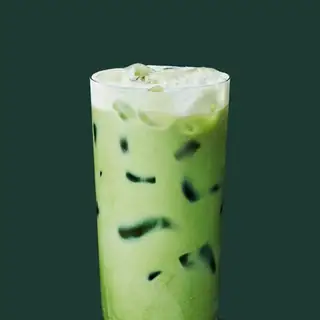
Iced Matcha Latte
This drink is matcha powder shaken with milk and classic syrup, then poured over ice. Since the recipe change, the powder is unsweetened, so you control the sweetness through the syrup. The card shows the delivery-app starting price. Below are sizes, calories, caffeine and swaps.
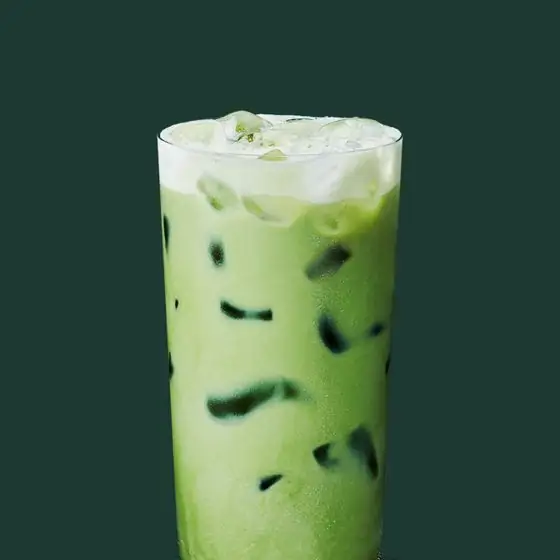
Cold matcha latte quick facts
Iced Matcha Latte
The Starbucks matcha iced latte is cold green tea powder shaken with milk and classic syrup, then poured over ice. On the menu it is simply the Iced Matcha Latte, and it is one of the easiest drinks to make sweeter, lighter or creamier. This guide covers what goes into the cup, how the sizes differ, where the calories and caffeine come from, and how to order it your way.
It sits inside the Starbucks matcha drinks group, and you can see every other category in the full Starbucks menu with every drink category.
The menu describes the drink as a green tea latte handcrafted with matcha, milk and classic syrup, served with ice. That is the whole recipe. Four parts, and you can change every one of them. The description also says the sweetness can be customized to your taste, which is the most useful line in it.
Iced Matcha Latte
The card shows the delivery-app starting price, not the in-store price.
Iced matcha tea latte Starbucks at a glance:
Matcha is green tea leaf ground into a fine powder. Because it is mixed into milk and never strained out, it stays in the cup as tiny particles. That is why the drink looks cloudy green and why some of the powder drifts to the bottom if you leave it sitting.
The flavor is grassy and slightly savory, softened by milk and sugar. If you have never had matcha, think of it as a creamier, sweeter cousin of green tea. If you like the taste of a latte but want less coffee bitterness, this is a natural place to start.
Starbucks changed this drink at the start of 2025. The company announced a new, unsweetened matcha powder and said every matcha beverage would be made with classic syrup by default, leaving the sweetness level up to you. Coverage at the time also reported that the powder is sourced from Japan and that the drink is now blended rather than shaken by hand.
Before that, the matcha came pre-mixed with sugar, and the ingredient list put sugar ahead of the tea. That is why older articles, and many calorie trackers, still describe the matcha as sweetened. Treat any figure that predates the change with care, because the sweetness now comes from the syrup you choose.
Starbucks also makes a hot Matcha Latte from the same ingredients. The iced version is the one most people mean when they say matcha at Starbucks.
A barista starts with the syrup and matcha in the cup, adds milk, then finishes with ice. Because the powder is unsweetened now, the syrup does the sweetening and the matcha does the flavor. The milk loosens everything into a smooth, pale green drink.
This order explains two common complaints. A drink made with too much ice tastes thin, because ice displaces milk. A drink that sat on the counter tastes uneven, because the powder settles. Ask for light ice if you want more milk and a stronger tea taste, and stir as soon as you pick the cup up.
Tall is 12 fl oz, grande is 16 fl oz and the iced venti is 24 fl oz. Starbucks does not print scoop or pump counts in the app, and they can vary by store, so treat any number you read online as a rule of thumb. What stays true everywhere is the pattern: bigger cups get more matcha and more classic syrup, so sweetness and caffeine both climb with size.
| Size | Cup size | Reported matcha scoops | Typical iced syrup pumps |
|---|---|---|---|
| Tall | 12 fl oz | 2 | 3 |
| Grande | 16 fl oz | 3 | 4 |
| Venti | 24 fl oz | 4 | 6 |
Treat that table as a guide, not a promise. Scoop counts come from customer and barista reports, and at least one guide lists four scoops for an iced grande, so stores may build it differently. The pump pattern of 3, 4 and 6 is the standard count for iced syrup drinks, and classic syrup is the default sweetener here. Ask your barista if the exact build matters, for example when you are counting sugar. Fewer scoops mean a milder tea flavor, and fewer pumps mean less sweetness, so you can adjust each one on its own. For a quick refresher on all the cup names, see Starbucks cup sizes.
The grande is the sweet spot for most people because it fits a normal cup holder and keeps the matcha taste from being watered down. If you drink slowly, the ice in a bigger cup melts and dilutes the tea, so a smaller size often tastes better at the last sip. That is the case for ordering the size you will finish in 20 minutes, and it closes out the sizes on the Starbucks matcha iced latte.
The venti gives you 24 fl oz, but a good share of that volume is ice. Compared with a grande, you are paying for more cup rather than a proportionally stronger drink, since milk fills in the extra room.
The upside is a longer-lasting drink if you sip through a long commute. The downside is more sugar, because the syrup count rises with the size. If sweetness is your concern, order the venti with fewer pumps rather than defaulting to the full build. The delivery-app price rises by size as well, so a venti is the priciest way to get the same flavor.
Calories in an iced matcha latte come from two places: the milk and the classic syrup. Since the 2025 change, the matcha powder itself is unsweetened, so the syrup is now the biggest lever you control. Calorie trackers list a grande made with 2% milk anywhere from about 190 to 240 calories, and the spread exists because some listings reflect the old sweetened recipe. The app's nutrition panel for your exact order is the number to trust.
Here is the arithmetic you can rely on. One pump of classic syrup adds roughly 20 calories and 5 g of sugar, according to published syrup guides. A grande with four pumps therefore gets about 80 of its calories from syrup, and cutting to two pumps trims about 40 calories and 10 g of sugar.
Milk is the second lever. This comparison lists published calories per cup of each milk Starbucks offers.
| Milk | Calories per cup | Protein per cup |
|---|---|---|
| Almond | 60 | 1 g |
| Coconut | 80 | 1 g |
| Nonfat | 90 | 9 g |
| Soy | 110 | 7 g |
| Oat | 120 | 3 g |
| 2% | 150 | 8 g |
Starbucks iced matcha latte calories move with the milk you pick. Whole milk sits above 2%, and the figures above come from one published comparison, so cup sizes and rounding can differ in the app.
Plant milks do not always come out lighter once they are in the cup. Sweetened versions can match dairy, so check the panel after you swap. If you are comparing drinks across the menu, the lower calorie Starbucks drinks page lists lighter options in one place.
The venti sits at the top of the matcha range because the venti gets the most syrup and the most milk. Sugar rises in step with the pump count, so a venti with six pumps carries about 30 g of sugar from syrup alone, twice what a tall gets with three.
You can pull it back quickly. Ask for half the pumps and the syrup sugar drops by that share, roughly 15 g for a venti. Milk sugar stays, since lactose is part of dairy, which is why a drink with no syrup still reads as lightly sweet. Always read the app panel after you customize, since it updates the figures for your exact choices.
The nutrition panel has the same shape as any milk-based latte: fat and protein from the milk, carbs and sugar from the syrup, and a modest amount of caffeine. Older listings put the sugar in a grande near 28 g, which reflects the pre-2025 powder. Today you can work it out yourself: pumps times 5 g, plus the natural sugar in your milk.
Protein and fat depend almost entirely on the milk. Dairy and soy bring the most protein, while almond and coconut bring about a gram per cup. Whole milk carries more fat than 2%, and nonfat carries none. If protein is the goal, the protein drinks page covers the matcha versions built with protein-boosted milk.
Asking for no classic syrup is the biggest calorie cut you can make without changing the milk. With the unsweetened powder, the drink drops by about 20 calories and 5 g of sugar for every pump you skip, and a grande made with four pumps loses around 80 calories.
With the new powder this is easier than it used to be, because the base is no longer pre-sweetened. Expect a stronger green tea taste, a little more bitterness and a thinner, less dessert-like feel. Some people love that. Others find it too grassy, so a middle path works well: ask for one or two pumps and see how it tastes. Tell the barista exactly what you want, because "unsweetened" is not a menu term and the person making your drink has to guess.
Caffeine in a Starbucks iced matcha green tea latte rises with size because bigger cups get more matcha. Reports put a tall near 55 mg, a grande near 80 mg and a venti near 110 mg, and some trackers list lower figures, so a grande lands somewhere between about 55 and 80 mg. The app panel shows the number Starbucks uses today.
For comparison, Starbucks has said a shot of its signature espresso carries about 75 mg of caffeine. A grande latte uses two shots, so it lands near 150 mg, roughly double the matcha. A grande brewed coffee lands in the low 300s. A grande nitro cold brew is around 280 mg. A matcha latte is a gentle lift, closer to a strong cup of tea than to a coffee order, and it is about on par with a grande Pink Drink at the low end and well above it at the high end.
Matcha also contains L-theanine, an amino acid found in tea. Some people feel it smooths out the jittery edge of caffeine, though how you feel depends on you, and no one should count on it as a guarantee.
The iced drink and the hot Matcha Latte share the same ingredients and the same name, but they feel like different drinks. Hot is steamed milk with a light layer of foam, so it is smooth, warm and a bit sweeter-tasting. Iced is cold milk poured over ice, which tastes lighter and more tea-forward.
| Detail | Hot Matcha Latte | Iced Matcha Latte |
|---|---|---|
| Temperature | Steamed | Over ice |
| Texture | Velvety with foam | Thin and cold, matcha can settle |
| Largest size | Venti is 20 fl oz | Venti is 24 fl oz |
| Delivery-app starting price | $6.05+ | $6.15+ |
The two are priced within about 10 cents of each other on the delivery menu, so cost should not decide it. Pick hot when the weather is cold or you want a slow, cozy sip. Pick iced when you want something you can drink fast and that tastes fresher. Hot drinks also keep their foam, while iced ones keep their color, which looks brighter green over ice. Ice takes up space in the iced cup, so the iced drink holds less liquid milk than the hot one at the same size name.
Because iced cups use more matcha and syrup at the venti size, the iced version can carry slightly more caffeine and sugar than the hot one at the top size. At tall and grande the builds are close.
Almost everything in this drink can be changed, and most swaps are free or a small upcharge. Oat milk is the most requested change, because it gives a creamy, rounded body that suits the grassy tea.
Flavored versions exist on the regular menu too. The matcha group lists Iced Orange Cream Matcha, Iced Mango Cream Matcha, Iced Lavender Cream Matcha, Iced Double Berry Matcha, Iced Banana Bread Matcha and Iced Dubai Chocolate Matcha. On the delivery app, those start around $7.15 to $7.35, roughly a dollar above the base drink. Seasonal options such as the Iced Pumpkin Cream Matcha come and go.
Topping the drink with foam is a common pairing, and it works best when the foam is sweet and creamy, because it balances the earthy tea. The menu descriptions show the pattern: orange cream, mango, lavender, pumpkin cream and chocolate cream foams all sit on top of the same matcha base. Vanilla sweet cream is the safest place to start if you are ordering your own.
Keep one rule in mind: the more flavors you stack, the more the matcha disappears. A single foam on a base with fewer pumps keeps the tea in front. Foam also adds sugar and calories on top of the syrup, so skip it if you are counting. The Starbucks cold foam flavors page explains each foam, and the strawberry matcha at Starbucks page covers the fruit-and-foam version.
Fans of the drink often compare it with three neighbors, and the main difference is the base: tea, spiced tea, fruit or coffee. Here is how they line up.
| Drink | Base | Taste | Caffeine level |
|---|---|---|---|
| Iced matcha latte | Matcha green tea | Grassy, creamy, lightly sweet | Moderate |
| Iced chai latte | Spiced black tea concentrate | Cinnamon, clove, sweet | Moderate |
| Strawberry matcha | Matcha plus fruit puree and foam | Fruity, sweet, creamy | Moderate |
| Iced latte | Espresso and milk | Roasty, mellow | Higher |
The iced chai latte is the better pick if you like spice and warmth. Strawberry matcha suits anyone who wants dessert in a cup, and the closest regular menu item is the Iced Double Berry Matcha with strawberry puree and raspberry foam. An iced latte gives the most caffeine. The plain matcha is the pick when you want tea flavor without much fuss.
Think about the time of day too. Matcha gives a steadier, lower lift than espresso, so it suits an afternoon pick-me-up better than a second latte. Chai is the cozy choice, and the berry matcha is the one to order when you want the drink to feel like a treat. If you cannot decide, start with the base drink and add one change at a time, so you learn which part you actually like.
The delivery-app starting price for the Iced Matcha Latte is $6.15+, and in-store prices vary by city, store and size. It costs more than iced tea because it is a milk-based latte with matcha, a pricier ingredient than regular tea bags. Plan on paying a bit extra for plant milk or cold foam.
The price sits above a plain iced tea and near other milk-based cold drinks. On the delivery app, the iced chai latte also starts at $6.15+, while the Matcha Crème Frappuccino starts at $6.75+. The grande costs more than the tall and the venti costs most of all. What adds cost is the size, a milk swap, extra matcha and each topping.
The delivery menu also adds a markup, so the app price is usually higher than what you pay at the counter. For the cheapest version, order a tall with regular milk and skip the extras.
Ordering is simple in the app and at the counter. In the app, open the Matcha category, pick Iced Matcha Latte, choose your size, then tap customize to change the milk and syrup pumps. At the counter, say the size first, then the changes, for example "grande iced matcha with oat milk and two pumps".
A few small requests make a real difference. Ask for light ice if you want a fuller cup. Ask the barista to mix it well if your last drink had clumps, and give it a stir yourself before you leave the counter. Light ice is a free change at most stores, though policies can vary.
Stir before your first sip. Matcha sits in the milk as fine powder, so it settles to the bottom, and the last third of the drink can taste stronger than the first. Drinks also taste slightly different from store to store, because each barista measures by hand.
You will like the iced matcha latte if you enjoy green tea, want a creamy drink that is not coffee, or like to control sweetness. It is less suited to anyone who dislikes grassy flavors or wants a strong dessert drink.
With a plant milk it can be a vegan-friendly order, since classic syrup is a sugar syrup and matcha is a plant. Starbucks does not promise a vegan result, because shared equipment and ingredient changes can affect it, so confirm in the app. Standard 2% milk means the default drink contains milk, a common allergen.
Matcha lattes are not a diet drink either, since the milk and syrup supply most of the calories. They are a treat that you can scale up or down, which is part of the appeal. Remember that the cup also carries caffeine. If you are sensitive, choose the tall, skip extra matcha and avoid late-day orders.
Reports put a grande near 80 mg of caffeine, with some trackers listing lower, around 55 to 65 mg. Tall runs lower and venti higher. Starbucks sets the official numbers and can update them, so check the nutrition panel in the app for your exact size. That is far less than a coffee of the same size.
Not in the powder anymore. Starbucks introduced an unsweetened matcha at the start of 2025, and the drink gets its sweetness from classic syrup, added by default. Older sources still describe a sugar-first blend. Asking for fewer pumps lowers the sweetness directly.
Starbucks does not publish scoop counts in the app. Customers commonly report two for tall, three for grande and four for venti, and the build can vary by store. Ask your barista if you need the exact count.
Name the size, then ask for fewer classic syrup pumps, such as two instead of the standard count. You can also ask for no syrup, which gives a bold, grassy drink. Check the drink in the app after customizing to see the updated numbers.
Yes. Oat, almond, coconut, soy, nonfat and whole milk can all replace 2%. Oat milk is the most popular swap because it adds a creamy body. Plant milks can change sweetness and calories, so recheck the nutrition panel after you swap.
A matcha latte is milk, matcha and syrup, served over ice or steamed. The Matcha Crème Frappuccino blended beverage is blended with ice into a thick, frozen texture and topped with sweetened whipped cream. It starts around $6.75 on the delivery app, against $6.15 for the iced latte.
It can be if you choose a plant milk, since classic syrup and matcha are plant-based. Starbucks does not guarantee vegan preparation, so confirm in the app, especially if you avoid cross-contact with dairy.
Starbucks iced matcha latte nutrition changes with the milk and the syrup pumps, so there is no single answer. The venti has the most calories of the three sizes. Open the drink in the app, select venti and your milk, and read the panel for exact figures.
Yes. Several menu drinks pair matcha with a flavored cold foam, and you can add one to the base drink in the app. Foam adds sweetness and calories, so skip it if you are watching sugar.
Strawberry matcha is best treated as a popular custom order of matcha, strawberry and cold foam, and seasonal versions have come and gone. The regular menu closest match is the Iced Double Berry Matcha. Availability depends on the store and season, so check the app or ask the barista.